

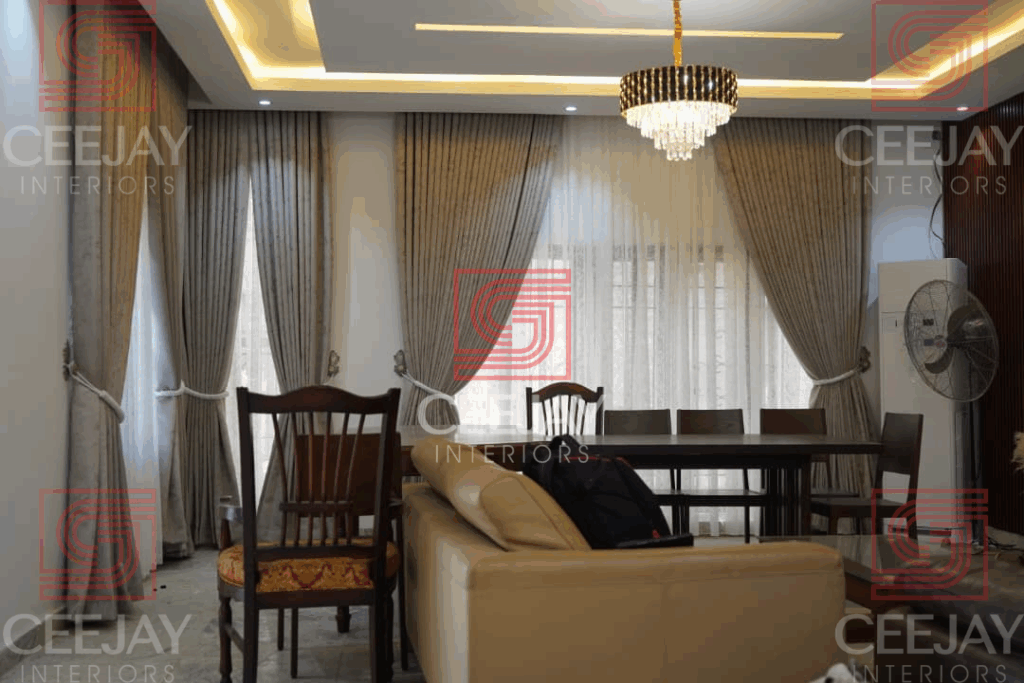
Open-plan living is beautiful, until it isn’t.
You get light, space, and that modern “Instagram-worthy” vibe… but then comes the reality:
echoing noise, clashing styles, awkward transitions between zones, and windows that feel either too exposed or poorly dressed.
That’s where curtains stop being just décor and start becoming architectural tools.
In this guide, we’ll break the rules (a little), rethink how curtains work, and show you how to design an open-plan space that feels intentional, cohesive, and quietly luxurious, with the right curtain choices.
First, Understand the Real Problem with Open Spaces
Most people approach curtains in open-plan homes like they would in a traditional layout, room by room.
That’s the mistake.
Open spaces are one continuous visual story.
So if your curtains don’t speak the same language, your home feels… disjointed.
The 3 Biggest Challenges:
- Lack of visual boundaries
- Too much light (or not enough control)
- Style inconsistency across zones
The solution? Curtains that don’t just cover windows, but define space, guide movement, and unify design.
Strategy 1: Use Curtains to Define Zones (Without Building Walls)
Here’s something most people don’t realize:
Curtains can act like invisible walls.
In an open-plan living room + dining + kitchen setup, you can use curtains to subtly divide areas without losing openness.
How to do it:
- Install ceiling-mounted curtain tracks between zones
- Use sheer or semi-sheer fabrics to maintain light flow
- Draw them only when needed (privacy, guests, mood)
Imagine hosting guests and softly closing off your kitchen area not with a door, but with elegant drapery. Instant sophistication.
If you’re unsure how to position these partitions, this is where custom curtain planning from Ceejay Interiors becomes invaluable. Getting the measurements and fabric weight right makes all the difference between “makeshift” and “magazine-worthy.”
Strategy 2: Stick to One Color Story (But Play with Texture)
Open-plan spaces demand harmony.
That doesn’t mean everything must match, it means everything must belong together.
The Winning Formula:
- Choose a base color palette (neutrals work best)
- Use different textures across zones:
- Living room → heavier drapes (e.g., velvet or layered fabric)
- Dining area → lighter, breathable fabrics
- Kitchen → minimal or sheer panels
Same color family. Different personalities.
That’s how you create interest without chaos.
Think of it like music, same key, different instruments.
Strategy 3: Master Light Control Like a Pro
Open-plan homes often have large windows—which is both a blessing and a headache.
Too much sunlight can:
- Fade furniture
- Overheat the space
- Make TV viewing uncomfortable
Too little control? You lose functionality.
The Fix: Layered Curtains
- Sheer curtains → for daytime elegance
- Blackout curtains → for full control when needed
This combination gives you flexibility throughout the day.
Ceejay Interiors offers layered curtain systems that are tailored to your window size and lighting direction, so you don’t end up with curtains that are either too heavy or completely ineffective.
Strategy 4: Go Floor-to-Ceiling (Always)
If you take only one thing from this article, let it be this:
Short curtains kill open-plan spaces.
They visually shrink the room and break the flow.
Instead:
- Install curtains from ceiling height to the floor
- Let them slightly “kiss” or puddle on the floor for a luxury effect
This simple upgrade:
- Makes ceilings look higher
- Enhances continuity across zones
- Adds a polished, designer finish
Strategy 5: Choose Fabrics That Match Your Lifestyle
Let’s be practical.
Your curtain choice should reflect how you live, not just how you want your home to look.
If you have kids:
- Go for durable, easy-to-clean fabrics
If you entertain often:
- Choose statement curtains that impress guests
If your space gets hot:
- Opt for lightweight, breathable materials
If you love luxury:
- Layer textures (sheer + velvet or satin)
One of the advantages of working with Ceejay Interiors is that you don’t have to guess. Their team helps you match fabric choices to your lifestyle, ensuring your curtains don’t just look good, but last.
Strategy 6: Align Curtains with Furniture Layout
This is where many homes lose cohesion.
Curtains should not exist in isolation, they should complement your furniture arrangement.
Practical Tips:
- Curtains behind a sofa? Keep them subtle
- Curtains near dining areas? Add softness and warmth
- Curtains framing a focal window? Make them bold
Think of curtains as part of the furniture conversation, not background noise.
Strategy 7: Create a Focal Point (But Only One)
Open-plan spaces can feel overwhelming if everything is trying to stand out.
So here’s the rule:
Let one curtain area be the “star.”
Examples:
- A bold patterned curtain in the living area
- Neutral curtains everywhere else
OR
- Dramatic layered curtains in the dining space
- Minimal curtains in the rest of the home
This creates balance and prevents visual clutter.
Strategy 8: Use Curtains to Improve Acoustics
Open-plan homes echo. A lot.
Curtains help absorb sound and make your space feel calmer.
Best choices:
- Thick fabrics
- Layered drapes
- Full-length curtains
You’ll notice:
- Better conversations
- Less noise bounce
- A more comfortable environment overall
Strategy 9: Think Beyond Windows
This is where things get interesting.
Curtains in open-plan spaces don’t have to stay on windows.
Creative Uses:
- Cover open storage shelves
- Hide cluttered corners
- Create temporary private areas
- Frame entryways between zones
It’s unconventional, but incredibly effective.
Strategy 10: Invest in Proper Installation
Even the best curtains will fail if installed poorly.
Common mistakes:
- Rods placed too low
- Curtains too narrow for the window
- Cheap hardware that bends over time
The difference professional installation makes:
- Perfect draping
- Long-lasting structure
- Clean, seamless finish
Ceejay Interiors doesn’t just supply curtains, they handle measurement, customization, and installation. That means no guesswork, no trial-and-error, and no costly mistakes.
Putting It All Together: A Real-Life Scenario
Picture this:
You walk into an open-plan home in Abuja.
The living area is framed with soft, floor-length neutral curtains.
The dining space has slightly textured drapes in the same color family.
A sheer partition subtly separates the kitchen when needed.
Light filters beautifully during the day, and blackout layers bring comfort at night.
Everything flows.
Nothing clashes.
That’s not luck, that’s intentional curtain design.
Final Thoughts: Curtains Are the Glue of Open Spaces
In open-plan living, curtains are not an afterthought, they are the unifying force.
They:
- Define space
- Control light
- Enhance aesthetics
- Improve comfort
And when done right, they elevate your home from “nice” to exceptional.
Ready to Transform Your Open Space?
If you’re looking to bring structure, elegance, and functionality into your open-plan home, now is the time to rethink your curtains.
Instead of settling for off-the-shelf solutions, consider custom-designed curtains tailored to your space.
Ceejay Interiors specializes in:
- Custom curtain design
- Premium fabrics and accessories
- Professional measurement & installation
- Nationwide delivery across Nigeria
Your space deserves more than just curtains, it deserves a design experience.
